
Best Neighbourhoods in London for Girls in Their 20s (A Completely Honest 2026 Guide)
You’ve decided to move to London. Brilliant choice. Now comes the part that sends most people into a mild panic: picking where to actually live.
London has 33 boroughs and roughly 670 distinct neighbourhoods. Everyone you ask will have a strong opinion — your colleague will swear by Clapham, your friend from Instagram is obsessed with Hackney, and your mum wants you somewhere “nice” (she means West London, she means safe, she won’t stop mentioning it).
Here’s the truth: there is no single best neighbourhood for women in their 20s. There are neighbourhoods that suit different personalities, budgets, and priorities. Some are buzzy and social; others are quieter and more creative. Some are expensive but beautiful; others are affordable and brilliantly alive.
I’ve pulled together five of the most popular choices — Hackney, Shoreditch, Dalston, Clapham, and Notting Hill — and given you the genuinely honest version. The good bits, the not-so-good bits, and exactly who each one suits.
Let’s get into it.
1. Hackney — For the Creative Soul
Hackney has been a London relocation favourite for a decade, and it still thoroughly deserves its reputation. It manages to be both neighbourhood-y and cosmopolitan at the same time, which is surprisingly rare in a city this size.
What’s the Vibe?
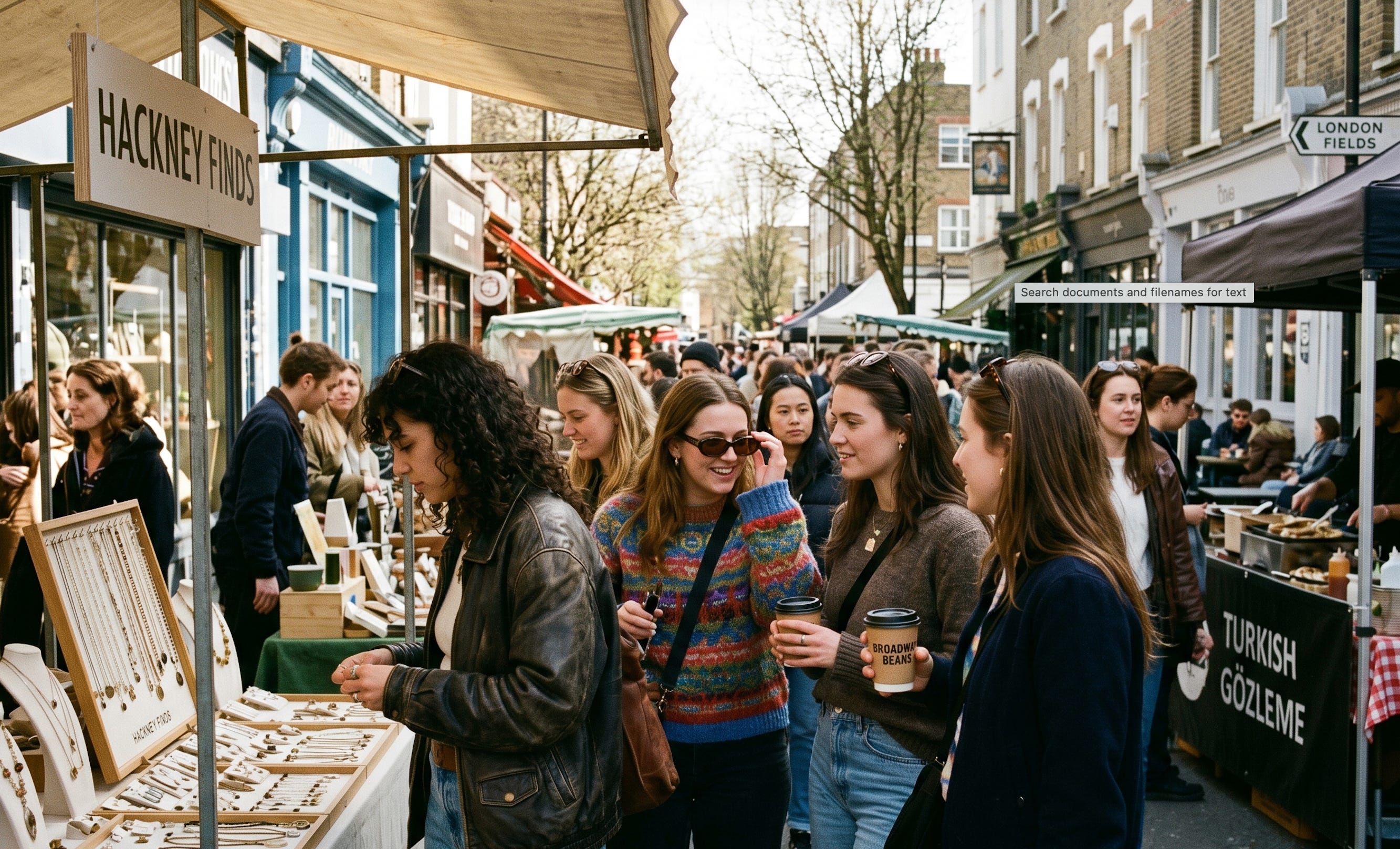
Think Saturday mornings at Broadway Market with a coffee from one of the independent cafés, afternoon drinks in a Victorian pub garden, and evenings at an intimate live music venue. Hackney feels creative without trying too hard. It’s diverse, relaxed, and full of people who’ve built interesting lives here. The area around London Fields is particularly lovely — the park is a genuine community hub, and the London Fields Lido, an outdoor heated swimming pool open year-round, is one of London’s best-kept secrets.
Where to Go and What to Do
Broadway Market on Saturdays is unmissable for food, coffee, and people-watching. Netil Market on Sundays is smaller but brilliant for vintage finds and street food. The Hackney Empire theatre hosts everything from comedy to world-class music. For food, the stretch of restaurants around Amhurst Road and Dalston Lane is consistently excellent. The Cat and Mutton and The Spurstowe Arms are solid neighbourhood pub choices on a rainy Tuesday.
Is It Right for You?
Hackney suits you if you work in a creative field, value community, and want a neighbourhood that genuinely feels like a neighbourhood. It’s not as chaotic as Shoreditch but still has plenty of energy. Budget-wise, expect to pay around £1,800–£2,200 per month for a one-bedroom flat — or considerably less if you’re flat-sharing, which is how most people in their 20s do it anyway.
2. Shoreditch and Bethnal Green — The Social Hub
Shoreditch is where London comes to show off. It’s the neighbourhood equivalent of a group chat that never stops — always something happening, always somewhere new to try, always someone interesting to meet.
What’s the Vibe?
Shoreditch is unapologetically cool. Street art (including famous works by Banksy), independent boutiques, Michelin-starred restaurants next to brilliant jerk chicken spots, and rooftop bars overlooking the City skyline. It’s also the heart of London’s tech industry (often called “Silicon Roundabout”), which means the coffee culture is world-class and co-working spaces are everywhere. Bethnal Green, just next door, is a fraction more affordable and slightly quieter — a great balance if you want Shoreditch energy without the full Shoreditch price tag.
Where to Go and What to Do
Boxpark Shoreditch is a brilliant casual dining and events space built from upcycled shipping containers. The Truman Brewery complex on Brick Lane hosts markets, exhibitions, and great nights out. Rich Mix is an excellent independent arts centre with cinema, theatre, and live music. For nightlife, you’re genuinely spoilt — everything from wine bars to proper clubs within walking distance of each other.
Is It Right for You?
Shoreditch suits you if you’re social, outgoing, and enjoy being at the centre of things. Be honest with yourself about the budget though — one-beds here run £2,000–£2,500 per month, and even flat-shares aren’t cheap. It’s worth it if you plan to spend most of your time out and about; less so if you just want a quiet base to come home to.
3. Dalston — For the Night Owl
Dalston is the neighbourhood that never quite sleeps. That’s either its greatest appeal or its greatest flaw, depending entirely on what you’re looking for.
What’s the Vibe?
Dalston is raw, loud, and brilliantly diverse. It has a strong Turkish and Caribbean community alongside a thriving arts and LGBTQ+ scene. The high street is a glorious mix of Turkish supermarkets, independent record shops, and some of the best cocktail bars in the city. It hasn’t been as thoroughly gentrified as Hackney or Shoreditch, which keeps it feeling genuinely alive rather than curated. This is London with the rough edges left on — and that’s a very good thing.
Where to Go and What to Do
Dalston Superstore is a landmark LGBTQ+ bar and club, and genuinely one of the best nights out in London. Ridley Road Market is a proper working market — open most weekdays, brilliant for fresh produce and Caribbean food. Oslo in nearby Hackney is a top live music venue worth the short walk. For something quieter, the cafés and independent shops along Stoke Newington Church Street (a short walk north) offer a charming contrast to the main strip.
Is It Right for You?
Dalston is for you if you love nightlife, live music, and a neighbourhood with genuine, unpolished character. It’s also one of the most affordable options on this list — one-beds typically come in at £1,700–£2,100 per month. The honest caveat: it is noisy, and the nightlife proximity is a double-edged sword if you need early nights for work.
4. Clapham — The Classic South London Choice
Clapham has a slightly unfair reputation as the “Aussie expat” neighbourhood — yes, there are plenty of Australians and South Africans here, but there is a great deal more to it than that.
What’s the Vibe?
Clapham is sociable, lively, and genuinely great fun in your 20s. Clapham Common is one of London’s finest parks — huge, green, and packed with people on every sunny afternoon. The high street (particularly around Clapham Old Town) has a brilliant range of restaurants, pubs, and cafés. It’s not as edgy as East London, but it doesn’t pretend to be — it’s simply a very pleasant, social place to live.
Where to Go and What to Do
The pubs around Clapham Old Town are among the best in South London — The Windmill and The Prince of Wales are perennial favourites. For brunch (practically a religion in Clapham), you’re thoroughly spoilt for choice. Clapham Grand is a brilliant live music and events venue. The Overground from Clapham Junction — one of the busiest rail interchanges in Europe — will get you to Victoria, Shoreditch, or Hackney without too much fuss.
Is It Right for You?
Clapham suits you if you’re sociable, love outdoor life, and want a neighbourhood with a strong social scene at a slightly more relaxed pace than East London. It’s particularly good if your friends are scattered across South London. One-beds typically run £1,900–£2,300 per month — comparable to Hackney but with a lot of parkside green space to show for it.
5. Notting Hill — For the Romantic at Heart
Notting Hill is one of the most beautiful neighbourhoods in the world. I’m not exaggerating. The pastel-coloured houses, the garden squares, the Saturday morning atmosphere on Portobello Road — it genuinely looks like a film set, because it literally has been one.
What’s the Vibe?
Notting Hill is quieter than the other neighbourhoods on this list, which is either its great appeal or its limitation depending on your priorities. It’s leafy, elegant, and expensive. The community has a bohemian, arty energy despite the wealth — artists, writers, and creative professionals have lived here for decades. Holland Park is just around the corner, complete with peacocks strolling through the formal Japanese gardens (yes, really).
Where to Go and What to Do
Portobello Road Market on Saturday mornings is essential — antiques, vintage clothing, street food, and the best people-watching in London. The restaurants and cafés along Westbourne Grove are excellent. The Electric Cinema on Portobello Road is the most charming cinema in London, with sofas and blankets instead of standard seats. Notting Hill Arts Club is a small, brilliant live music venue. And every August bank holiday, Notting Hill Carnival transforms the entire neighbourhood into the largest street festival in Europe — two days of steel bands, sound systems, and extraordinary food celebrating the area’s Afro-Caribbean heritage.
Is It Right for You?
Notting Hill suits you if you want beauty, calm, and a more refined pace of life. It’s the most expensive neighbourhood on this list — one-beds typically start at £2,500 per month and go significantly higher. If your budget stretches, it’s genuinely magical. If it doesn’t, it’s still absolutely worth visiting for a Saturday morning wander and a coffee before heading home to somewhere more affordable.
FAQs
Q: Which London neighbourhood is best for women in their 20s on a budget? A: Dalston and Bethnal Green offer the best value among the popular areas — one-bed flats start from around £1,700 per month. Flat-sharing (very common in your 20s) brings all the neighbourhoods on this list within reach.
Q: Is London safe for women living alone? A: London is broadly a safe city, and all five neighbourhoods here are popular precisely because they feel liveable and accessible. As with any large city, normal awareness and common sense go a long way.
Q: What’s the best neighbourhood for a young professional working in the City? A: Hackney or Shoreditch — both are 15–20 minutes from the City by Tube or Overground, with excellent food and social scenes close to home.
Q: What’s the best area for someone who loves brunch and coffee culture? A: Hackney is unrivalled. Broadway Market on Saturdays is coffee and brunch heaven, and the neighbourhood has some of the finest independent cafés in London.
Q: Which neighbourhood has the best nightlife? A: Dalston for clubs and alternative nights; Shoreditch for variety and bar-hopping. Clapham is excellent for pubs and a slightly more relaxed social scene.
Q: What’s the easiest neighbourhood to get around London from? A: Shoreditch (Shoreditch High Street Overground) and Hackney (Hackney Central, London Fields, Dalston Junction) are very well connected. Clapham Junction is one of the busiest rail interchanges in Europe, making Clapham brilliant for getting anywhere in the city.
Q: Can I find a flat share in any of these neighbourhoods? A: Yes — flat-sharing is very common in all five areas. Websites like SpareRoom and Rightmove list hundreds of available rooms at any given time, typically from £900–£1,400 per month for a room in a shared flat.
Q: Which area is most popular with young international women moving to London? A: Shoreditch, Hackney, and Clapham all have strong expat and international communities. South Kensington (not on this list but worth knowing) has a well-established French and broader European community.
Q: Is Notting Hill worth the higher price tag? A: If you value beauty, calm, and a certain quality of daily life — yes. If you want energy, nightlife, and value for money, probably not. It genuinely depends on what you’re after from your London experience.
Q: How do I choose between East London and South London? A: East London (Hackney, Shoreditch, Dalston) tends to be edgier, more creative, and better connected to the City. South London (Clapham, Brixton, Peckham) tends to be slightly more relaxed and social. Try to visit both before you decide — they have very different energies in person.
Destined for London shares personal opinions and independent research. Always seek qualified professional advice before making any decision based on what you read here.