
Henry Moore at Kew Gardens: Why This Summer Art Show Is Worth Leaving Central London For
Note: This article shares personal opinions and independent research. Exhibition dates, ticket prices and opening hours change — always check the official Kew Gardens website before visiting. Figures reflect information available at the time of writing.
Most of us think of art and nature as separate days out. You do a gallery, or you do a garden. But every so often London offers something that fuses the two so beautifully it’s worth crossing the whole city for. In summer 2026, that something is Henry Moore at Kew Gardens.
Here’s the hesitation, though. Kew is a trek for a lot of visitors — out west, away from the central sights — and it isn’t free. So the fair question is: is a sculpture exhibition really worth the journey and the admission, when there’s so much closer to hand?
I think it genuinely might be, and I want to explain why. This guide covers what the exhibition is, when and where to see it, what it costs, and the honest pros and cons of making the trip. If you love art, gardens, or simply a memorable day out, here’s everything you need to know about one of the most ambitious shows of the London summer.
What Is Henry Moore: Monumental Nature?
Henry Moore was one of the most influential and internationally recognised artists of the twentieth century, a British sculptor famous for his large, abstract forms inspired by the human body and the natural world. In summer 2026, Kew Gardens hosts Henry Moore: Monumental Nature — billed as the largest outdoor presentation of his work ever staged.
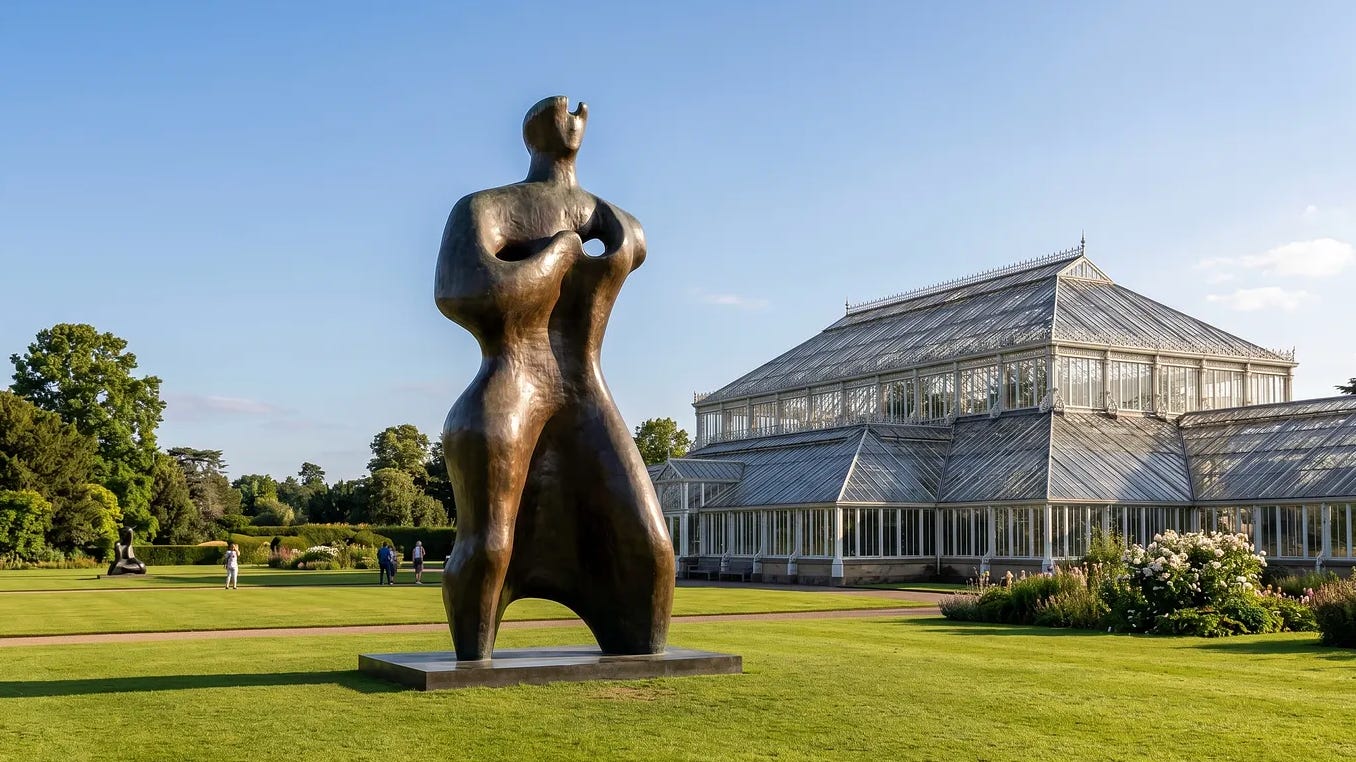
The show features around 30 monumental sculptures set across Kew’s 320-acre UNESCO World Heritage landscape, with works positioned among historic vistas, mature trees and the great Victorian glasshouses, including the iconic Temperate House. Alongside the outdoor sculptures, the Shirley Sherwood Gallery of Botanical Art displays drawings, prints and smaller works spanning Moore’s entire career.
What makes it special is the setting. Moore believed sculpture belonged outdoors, in dialogue with landscape, and Kew is about as spectacular a backdrop as exists. Seeing these huge bronze forms framed by trees and glasshouses, rather than in a white-walled gallery, is exactly how the artist intended his work to be experienced. It’s a rare alignment of art and place.
When and Where Can You See It?
The exhibition opens at Kew Gardens on 9 May 2026 and runs through the summer, with the outdoor sculptures on display into late September. Some elements, particularly the indoor gallery displays, are listed as running later still, so always check current dates on the Kew website before planning a special trip.
Kew Gardens sits in Richmond, southwest London. The easiest way there is by Tube or Overground to Kew Gardens station (District line and London Overground), a short walk from the Victoria Gate entrance. Kew Bridge national rail station is another option, and there’s parking nearby for drivers, though public transport is simpler.
A practical note worth knowing: the exhibition is included with general Kew Gardens admission — you don’t need a separate exhibition ticket. That changes the value calculation a lot, because you’re getting one of the world’s great botanic gardens and a landmark art show on a single ticket. Booking your Kew entry online in advance usually saves a little and guarantees your slot.
What to Expect on Your Visit
The real pleasure of Monumental Nature is the journey through it. Rather than queuing for one room, you wander Kew’s sweeping landscape and come upon the sculptures in turn — a great bronze form on a lawn here, another framed by an avenue of trees there. It turns a garden stroll into a treasure hunt.
The richer experience is to move between the outdoor works and the gallery, where you can see how Moore developed a small natural form — a bone, a stone, a shell — into a monumental public sculpture. It gives you a window into his creative process that the outdoor pieces alone don’t.
And of course, you’ve got all of Kew besides: the rainforest of the Palm House, the climate zones of the Princess of Wales Conservatory, the giant lily pads of the Waterlily House, and the 18-metre-high Treetop Walkway for a view over it all. My honest advice is to set aside a full day. Kew is enormous, the sculptures are spread out, and rushing it would waste both the art and the gardens. Wear comfortable shoes and pack for the weather.
Is It Worth Leaving Central London For?
Let me be straight about the trade-offs. Kew is a genuine journey from the centre — budget 45 minutes or so each way — and admission isn’t cheap, though it covers both the gardens and the exhibition. If you’ve only got a day or two in London and haven’t seen the headline central sights, this probably isn’t your priority.
But if you have a little more time, love art or gardens, or simply want a calmer, greener day away from the central crush, I’d say it’s absolutely worth it. The combination of a once-in-a-generation Moore show and one of the planet’s finest botanic gardens, on a single ticket, is hard to beat. It’s the kind of day that stays with you.
The people who’ll get the most from it are those who treat it as a full, unhurried day out rather than a quick tick-box. Go with time to spare, let yourself wander, and Kew rewards you generously. It’s a special one.
Henry Moore at Kew is the kind of London summer experience that justifies the journey: monumental art set in a world-class garden, the two enhancing each other in a way neither could alone. On one ticket, it’s a genuinely generous day out and a rare chance to see a great British sculptor’s work exactly as he meant it to be seen — outdoors, among living things.
Give it a full, unhurried day, pack for the weather, and let yourself wander between the bronzes and the blooms. I’d love to know which sculpture stops you in your tracks.
FAQs
Q: What is Henry Moore: Monumental Nature?
A: It’s a major 2026 exhibition at Kew Gardens, the largest outdoor presentation of Henry Moore’s sculpture ever staged, with around 30 monumental works across the gardens plus gallery displays.
Q: When is the Henry Moore exhibition at Kew?
A: It opens on 9 May 2026 and the outdoor sculptures run through the summer into late September. Check the Kew website for exact current dates.
Q: Do I need a separate ticket for the exhibition?
A: No. It’s included with general Kew Gardens admission, so a single ticket covers both the gardens and the Moore exhibition.
Q: How much does it cost?
A: The cost is your Kew Gardens admission, which it’s worth booking online in advance to save a little. Check current prices on the Kew website.
Q: How do I get to Kew Gardens?
A: Kew Gardens station (District line and London Overground) is closest, a short walk from the Victoria Gate. Kew Bridge rail station is another option.
Q: How long should I spend there?
A: Allow a full day. Kew is 320 acres, the sculptures are spread across the landscape, and there’s much more to see, so rushing isn’t worth it.
Q: Where are the sculptures displayed?
A: Across Kew’s outdoor landscape, among trees, vistas and glasshouses including the Temperate House, with works on paper and smaller pieces in the Shirley Sherwood Gallery.
Q: Is it suitable for children?
A: Yes. Wandering the gardens to find giant sculptures can be fun for children, and there’s plenty else at Kew to keep families happy.
Q: Is it worth travelling from central London?
A: If you have time and enjoy art or gardens, yes — it’s a special day out. If you’re short on time and haven’t seen the central sights, it may not be the priority.
Q: Can I take photos?
A: Photography for personal use is generally fine in the gardens. Check Kew’s current guidance for any restrictions, especially in the indoor gallery.
DISCLAIMER
A note from the editor: Destined for London shares my personal experiences, opinions, and independent research. Exhibition dates, prices and opening hours change — always check the official Kew Gardens website before visiting. Some links in my posts may be affiliate links, meaning I may earn a small commission at no extra cost to you. Sponsored content is always clearly labelled.