
How to Use the NHS as a Visitor to London (And When You Actually Need to Pay)
Important: This article provides general information about accessing healthcare as a visitor to London. It is not medical advice. For medical advice, consult a qualified healthcare professional. NHS rules on visitor charges are set by government policy and change periodically — always verify the current rules at nhs.uk before relying on this information. In a medical emergency, call 999.
The NHS — the National Health Service — is the publicly funded healthcare system serving England, Scotland, Wales, and Northern Ireland. Understanding how it works for visitors is useful, and the rules are more nuanced than most people expect.
What You Should Know Before You Travel
Travel insurance is strongly recommended. Even if you’re entitled to free NHS treatment as a visitor, travel insurance provides access to private healthcare (often faster, particularly for non-emergency care), repatriation coverage, and protection against costs that the NHS doesn’t cover. I’d never visit London without it.
European Health Insurance Cards (EHIC/GHIC): Citizens of EU countries, Switzerland, and some other countries may have access to necessary healthcare at the same cost as UK residents under reciprocal arrangements. At the time of writing, the UK Global Health Insurance Card (GHIC) is the relevant card for UK residents travelling abroad; EU residents should check their EHIC status and the current UK-EU healthcare arrangement. Rules in this area change — check the current position at nhs.uk before travelling.
Emergencies: Always Free
Emergency treatment in A&E (Accident & Emergency) is free to everyone, regardless of nationality or immigration status. If you need emergency treatment, go to the nearest A&E or call 999 (police, fire, ambulance) — you will be treated.
999 is the emergency number in the UK for immediate life-threatening situations.
111 is the NHS non-emergency helpline — available 24 hours, can provide medical advice, refer you to appropriate services, and tell you whether you need to attend A&E.
What Visitors Generally Pay For
Non-emergency NHS treatment — GP appointments, non-urgent outpatient appointments, planned procedures — is generally chargeable to overseas visitors who are not ordinarily resident in the UK and not from a country with a reciprocal healthcare agreement.
At the time of writing, visitors from many countries (including EU member states with the relevant card) have reciprocal access to necessary healthcare. Check the current list at nhs.uk, as arrangements change.
Practical Options for Non-Emergency Healthcare
NHS 111
For non-emergency medical questions and guidance, 111 is the first port of call. It’s free to call, available 24 hours, and staffed by clinicians who can advise on whether you need to see a GP, attend a walk-in centre, or go to A&E.
NHS Walk-In Centres and Urgent Treatment Centres
Walk-in centres and urgent treatment centres see patients without appointments for non-emergency conditions — minor injuries, infections, and similar. Treatment charges may apply depending on your country of origin and current NHS policy. Ask about charges before receiving non-emergency treatment.
These are distinct from A&E and are designed for conditions that are urgent but not life-threatening.
Pharmacies
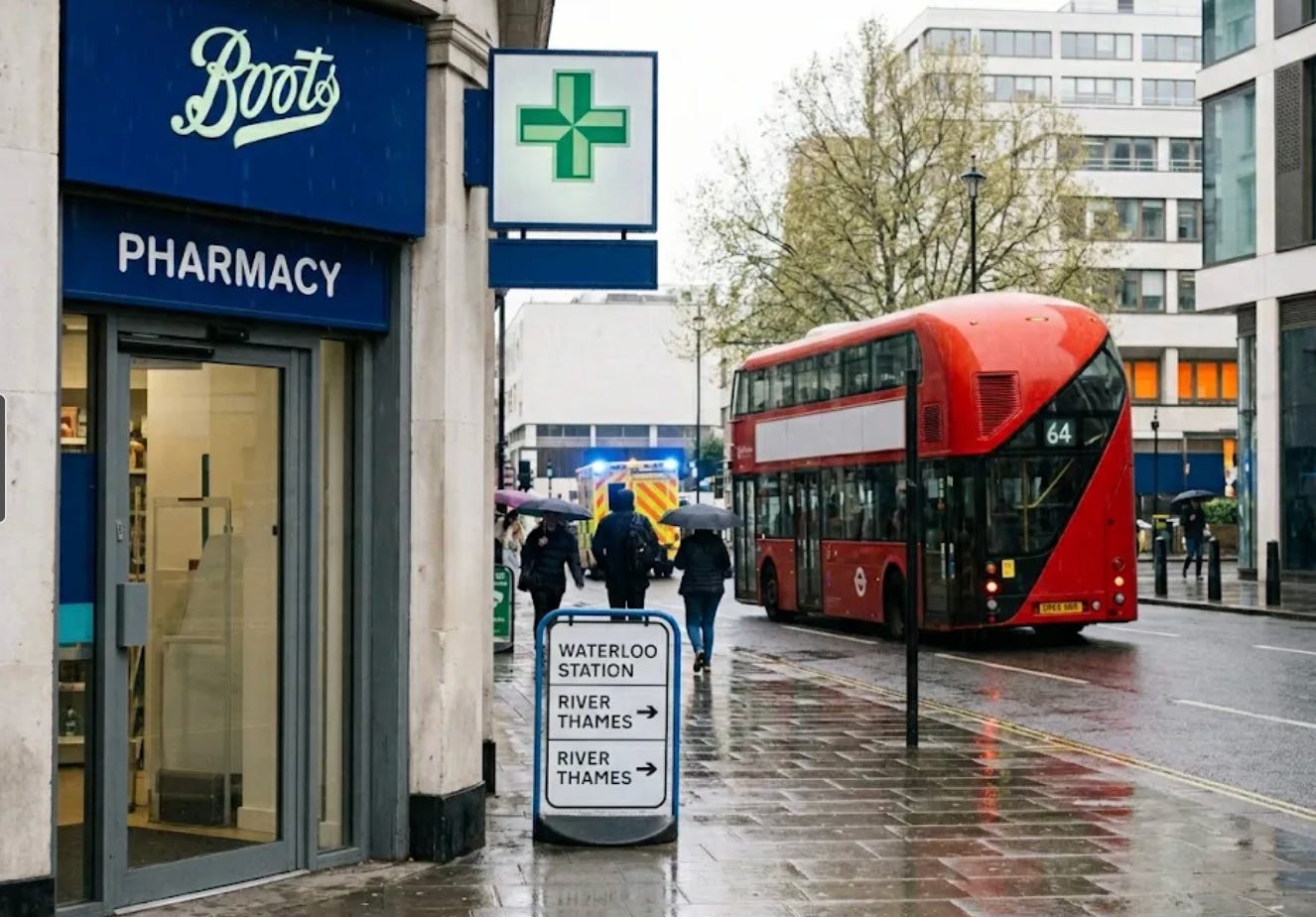
London has an extensive network of community pharmacies (Boots, Lloyds, independents) that can provide advice on minor conditions, over-the-counter medications, and certain prescription treatments under the Pharmacy First scheme. At the time of writing, pharmacists can treat a range of common conditions including UTIs, sore throats, earache, and skin conditions under a government scheme — check nhs.uk for current services. Most of these pharmacy consultations are free regardless of nationality.
For minor ailments — a cold, an upset stomach, a minor injury — a pharmacy is usually the right first stop and significantly faster than an A&E or walk-in centre.
Private Walk-In Clinics
London has numerous private walk-in clinics that charge a fixed fee (typically £80–200 for a consultation, depending on the clinic and treatment required) and can see patients quickly for non-emergency conditions. Travel insurance usually covers this. This is often the fastest and most practical option for minor conditions if you want certainty about access and costs.
Dental and Optometry
NHS dental treatment is chargeable to most visitors. Private dental clinics are widely available in London. For a dental emergency (severe pain, swelling, broken tooth), NHS 111 can direct you to emergency dental services.
Optometry is generally not covered by NHS for visitors. High Street opticians (Specsavers, Vision Express) can see patients quickly for eye-related concerns.
Prescriptions
NHS prescriptions in England cost a fixed charge per item (at the time of writing, approximately £9.90). Some visitors may be exempt from charges depending on their status. In a pharmacy, ask about the current charges before accepting a prescription.
FAQs
1. Is emergency treatment in London really free for visitors?
At the time of writing, yes — emergency treatment in A&E is free to everyone. The NHS does not turn away emergencies due to an inability to pay.
2. What should I do if I have a medical emergency in London?
Call 999 (free from any phone) for immediate life-threatening emergencies. For urgent but non-life-threatening situations, call 111 or attend an urgent treatment centre.
3. Do I need travel insurance to visit London?
Not legally required. In my strong personal opinion, yes — the combination of potential healthcare charges for non-emergency treatment, repatriation coverage, and general travel protection makes it strongly advisable.
4. Can I use an EU EHIC card in London?
At the time of writing, EU EHIC cards are accepted in the UK for necessary healthcare on the same basis as UK residents. Check the current arrangements at nhs.uk, as post-Brexit rules in this area continue to evolve.
5. How do I find the nearest A&E in London?
The NHS website (nhs.uk) has a service finder. Major central London A&E departments include University College Hospital (Euston), King’s College Hospital (Denmark Hill), St Thomas’ Hospital (Waterloo), and the Royal London Hospital (Whitechapel).
6. How long are A&E waiting times in London?
This varies enormously and changes daily. NHS 111 can advise on current waiting times and whether an A&E visit is appropriate. Minor injuries units and urgent treatment centres often have shorter waits for appropriate conditions.
7. What is the difference between A&E and an urgent treatment centre?
A&E (Accident and Emergency) treats life-threatening emergencies. Urgent treatment centres treat urgent but non-life-threatening conditions — sprains, minor wounds, infections. The NHS 111 service can direct you to the appropriate facility.
8. Are London pharmacies open 24 hours?
Some are — particularly in central London areas. Boots on Piccadilly Circus is one of the most centrally located with extended hours. Check Google Maps for the nearest open pharmacy.
9. How much does a private walk-in clinic consultation cost in London?
At the time of writing, typically £80–200 for a GP-equivalent consultation, depending on the clinic. Some clinics charge more for specialist consultations. Check with your travel insurer before attending, as most policies cover this.
10. What should I do if I need mental health support during my visit?
Samaritans (116 123, free to call 24 hours) provides confidential emotional support. For mental health crises, 999 or 111 can access mental health crisis teams. For non-urgent support, the NHS 111 service can direct you to appropriate resources.
— A note from the editor
Destined for London shares my personal experiences, opinions, and independent research. Everything I write reflects what I’ve found to be true at the time of publishing — but London changes constantly, and what works for me may not work for you. Always do your own research and seek qualified professional advice before making decisions about property, finance, schools, healthcare, or anything else that matters. Some links in my posts are affiliate links, meaning I may earn a small commission at no extra cost to you. Sponsored content is always clearly labelled. Read the full Terms and Privacy Policy.