
How to Work Remotely From London: Best Co-Working Spaces and Cafés in 2026
Please note: Co-working space pricing, café policies, and membership availability change regularly. Always verify details directly with venues before visiting or committing to a membership. Figures and listings in this article reflect information available in May 2026.
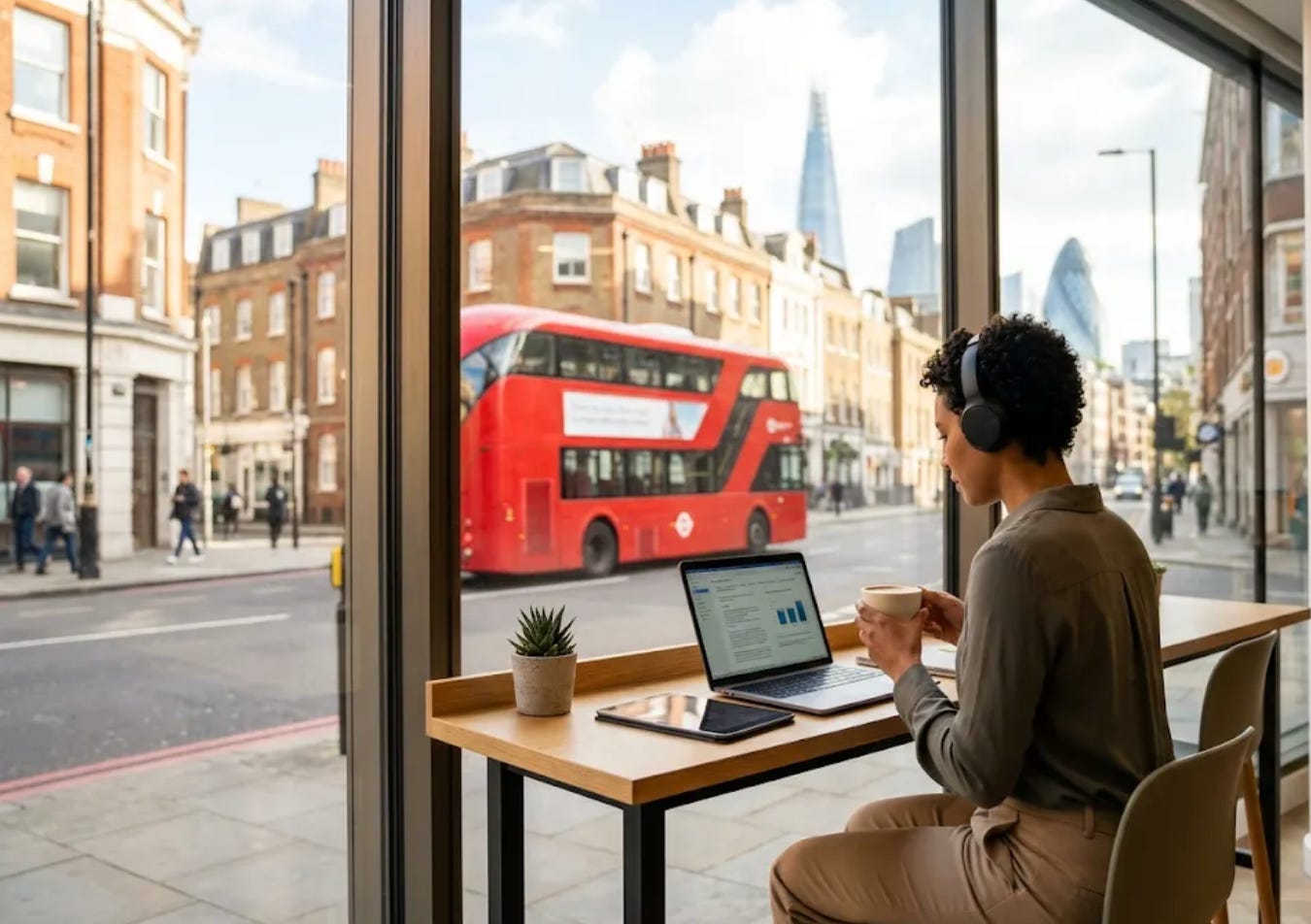
London has fully embraced the remote working revolution. What started as a pandemic-era necessity has evolved into a thriving ecosystem of co-working spaces, laptop-friendly cafés, and flexible membership clubs that cater to every budget and working style. Whether you’re a digital nomad passing through, a freelancer craving community, or a remote employee who can’t face another day on the sofa, London has something for you.
Here’s your complete guide to working remotely from London in 2026 — from the best co-working spaces by area to the cafés that won’t kick you out after one flat white.
Why London Is One of the Best Cities for Remote Work
London’s remote working infrastructure has matured enormously over the past few years. The city now boasts hundreds of co-working spaces, a fast and relatively reliable underground network, and a café culture that actively welcomes laptop workers. Superfast broadband is near-universal across the city, most co-working spaces offer gigabit connections, and the sheer density of options means you’re rarely more than a short walk from somewhere comfortable to work.
Beyond logistics, London’s creative energy makes it a genuinely inspiring place to work. The city’s mix of industries — tech, media, finance, fashion, food — means co-working spaces are often filled with interesting people doing interesting things. Networking happens naturally.
The Best Co-Working Spaces in London in 2026
WeWork — Multiple Locations
WeWork remains one of London’s most recognisable co-working brands, with locations across the city including Moorgate, Waterloo, Paddington, and White City. Their hot desk memberships start from around £300 per month, with private offices available for teams. The interiors are polished, the coffee is decent, and the community events are genuinely useful for freelancers and small business owners.
Best for: Professionals who want a reliable, corporate-feeling environment with multiple location options.
Second Home — Spitalfields and Lisbon (with London base)
Second Home’s Spitalfields location is one of London’s most visually distinctive co-working spaces, designed by Spanish architects SelgasCano with a jungle of plants and floor-to-ceiling windows. It attracts a creative, entrepreneurial crowd and hosts a strong programme of talks and events. Membership is competitive, so join the waitlist early.
Best for: Creative professionals and entrepreneurs who care about environment and community.
Fora — Clerkenwell, Shoreditch, and Beyond
Fora has quietly become one of London’s best mid-market co-working operators. Their spaces are thoughtfully designed, the staff are genuinely helpful, and their app makes booking meeting rooms and managing your membership easy. Day passes are available if you want to try before committing.
Best for: Freelancers and remote workers who want quality without WeWork prices.
The Hoxton — Holborn and Shoreditch
The Hoxton hotels have long welcomed remote workers into their lobbies and public spaces, and their membership programme formalises this arrangement. Monthly members get access to co-working areas, meeting rooms, printing, and discounts across the hotel. The Holborn location in particular is a beautiful place to spend a working day.
Best for: Those who value atmosphere and hotel-quality amenities alongside their desk space.
Workspace — East London Focus
Workspace is a London-specific co-working operator with a strong presence in East London, including Bethnal Green, Hackney, and Islington. Their spaces tend to attract tech startups and creative businesses, and their prices are often more competitive than the big national chains. They offer flexible monthly memberships with no long-term commitment required.
Best for: East Londoners and tech workers who want flexibility and community.
Huckletree — Shoreditch and White City
Huckletree is a favourite among London’s startup community. Their Shoreditch space is particularly popular, with strong programming around entrepreneurship and innovation. The White City location, near the BBC and Imperial College London, attracts a different crowd — more deep tech and life sciences. Both are worth considering.
Best for: Founders, startup employees, and anyone building a business.
Budget Co-Working: Libraries and Low-Cost Options
Not everyone can or wants to pay £300+ per month for a desk. London has plenty of lower-cost alternatives.
The British Library (King’s Cross) is famously laptop-friendly in its public reading areas, and the café is a genuine institution. It’s free to use as a working space, though you’ll need a library card for the main reading rooms.
Tate Modern and Tate Britain both have café areas where laptop working is tolerated, and the inspiration on tap is unbeatable.
Local council libraries across the city offer free desks and Wi-Fi. Islington, Hackney, and Lambeth all have excellent central library facilities that are far less crowded than the tourist spots.
Ziferblat (Shoreditch) operates on a pay-per-minute model — you pay for the time you’re there, not for a membership. Coffee, tea, and snacks are included. It’s excellent value for a few hours of focused work.
The Best Cafés for Laptop Working in London in 2026
Monmouth Coffee — Borough Market and Covent Garden
Monmouth is one of London’s best-loved independent coffee shops, and while space is limited, their Borough Market location has a dedicated seating area that works well for solo workers. The coffee is exceptional and the atmosphere is calm and focused.
Notes Coffee — Multiple Locations
Notes has locations across the City, Soho, and South Bank, and they’re consistently good for laptop working. Strong Wi-Fi, excellent coffee, and staff who don’t hover. The Trafalgar Square location is particularly spacious.
Attendant — Fitzrovia and Clerkenwell
Attendant occupies beautifully converted Victorian toilet buildings — which sounds odd but looks incredible. Their Fitzrovia location has a long bar that’s ideal for solo workers, and the coffee is among the best in the city.
Ace Hotel Lobby — Shoreditch
The Ace Hotel lobby is a perennial favourite for remote workers in East London. It’s large, the coffee is good, the Wi-Fi is fast, and the vibe is creative without being distracting. No membership required — just buy a drink and settle in.
Ozone Coffee — Old Street
Ozone is an antipodean import that has become a fixture of the Old Street/Tech City area. It’s spacious, the coffee is excellent, and the food menu is substantial enough for a full working day. The long communal tables make it ideal for solo workers.
Tips for Remote Working in London
Mind the rush hour. If you’re heading to a co-working space or café, try to arrive before 9am or after 10am. Central London fills up fast.
Get an Oyster card or contactless payment sorted first. Being able to hop between locations freely makes remote working in London much more practical.
Try different areas on different days. One of the joys of remote working in London is that you can be in Shoreditch one day and South Bank the next. Take advantage of it.
Join the co-working space’s community. Most spaces run events, Slack groups, or networking sessions. These are genuinely valuable, especially if you’re new to the city.
Know the noise levels. Some co-working spaces and cafés are loud and social; others are library-quiet. Check reviews and visit at different times before committing to a membership.
Neighbourhood Guide: Where to Work in London
Shoreditch / Tech City: The original home of London’s startup scene. Packed with co-working options, great coffee, and a buzz that’s hard to match. Can feel overwhelming; best during mid-week.
Clerkenwell: Quieter than Shoreditch but with excellent co-working options and a strong design and architecture community. A great base for creative professionals.
King’s Cross / Euston: Transformed in recent years with Google’s new campus nearby. Excellent transport links and a growing selection of co-working spaces.
South Bank / London Bridge: Beautiful riverside setting, excellent café culture, and a mix of creative and corporate co-working spaces.
Brixton / Peckham: South London’s best areas for independent co-working. More affordable, more diverse, and with a creative energy that’s increasingly attracting remote workers.
FAQ
1. Do I need a co-working membership to work remotely in London?
No — many cafés welcome laptop workers, and public libraries offer free desk space and Wi-Fi. Memberships are useful if you need guaranteed desk space, meeting rooms, or a professional address.
2. What’s the average cost of a co-working membership in London?
Hot desk memberships typically range from £150–£400 per month depending on location and operator. Dedicated desks and private offices are considerably more expensive.
3. Is Wi-Fi reliable in London co-working spaces?
Generally yes. Most established co-working spaces offer gigabit or near-gigabit connections. Cafés vary — check reviews or ask before settling in for a full day.
4. Are there co-working spaces that offer day passes?
Yes — many operators including Fora, WeWork, and Huckletree offer day passes, typically ranging from £20–£45. Good for trying a space before committing to a membership.
5. Can I use a co-working space as a business address?
Many London co-working spaces offer a registered business address service as part of their membership packages. Useful for freelancers and sole traders.
6. Which London area is best for tech remote workers?
Shoreditch / Old Street / King’s Cross is the traditional tech hub. The White City Innovation District is growing rapidly and worth considering, especially for deep tech and media.
7. Are there quiet co-working spaces in London?
Yes — Second Home, Fora, and many library-based spaces maintain quiet working policies. Always check individual space policies before visiting.
8. Do London cafés have time limits for laptop workers?
Some do, especially during busy periods. It’s best practice to buy something every hour or two. Most independent cafés are relaxed about this; chains can be stricter.
9. Is co-working in London cheaper than renting office space?
For most freelancers and small teams, yes — significantly so. A hot desk membership typically costs a fraction of a private office lease and comes with far more flexibility.
10. What should I look for in a co-working space?
Beyond price and location, consider: Wi-Fi speed, noise levels, meeting room availability, community events, and the membership cancellation policy.
DISCLAIMER
— A note from the editor
Destined for London shares my personal experiences, opinions, and independent research. Everything I write reflects what I’ve found to be true at the time of publishing — but London changes constantly, and what works for me may not work for you. Always do your own research and seek qualified professional advice before making decisions about property, finance, schools, healthcare, or anything else that matters. Some links in my posts are affiliate links, meaning I may earn a small commission at no extra cost to you. Sponsored content is always clearly labelled.