
Slow Travel in London: How to Experience the City Like You Actually Live There
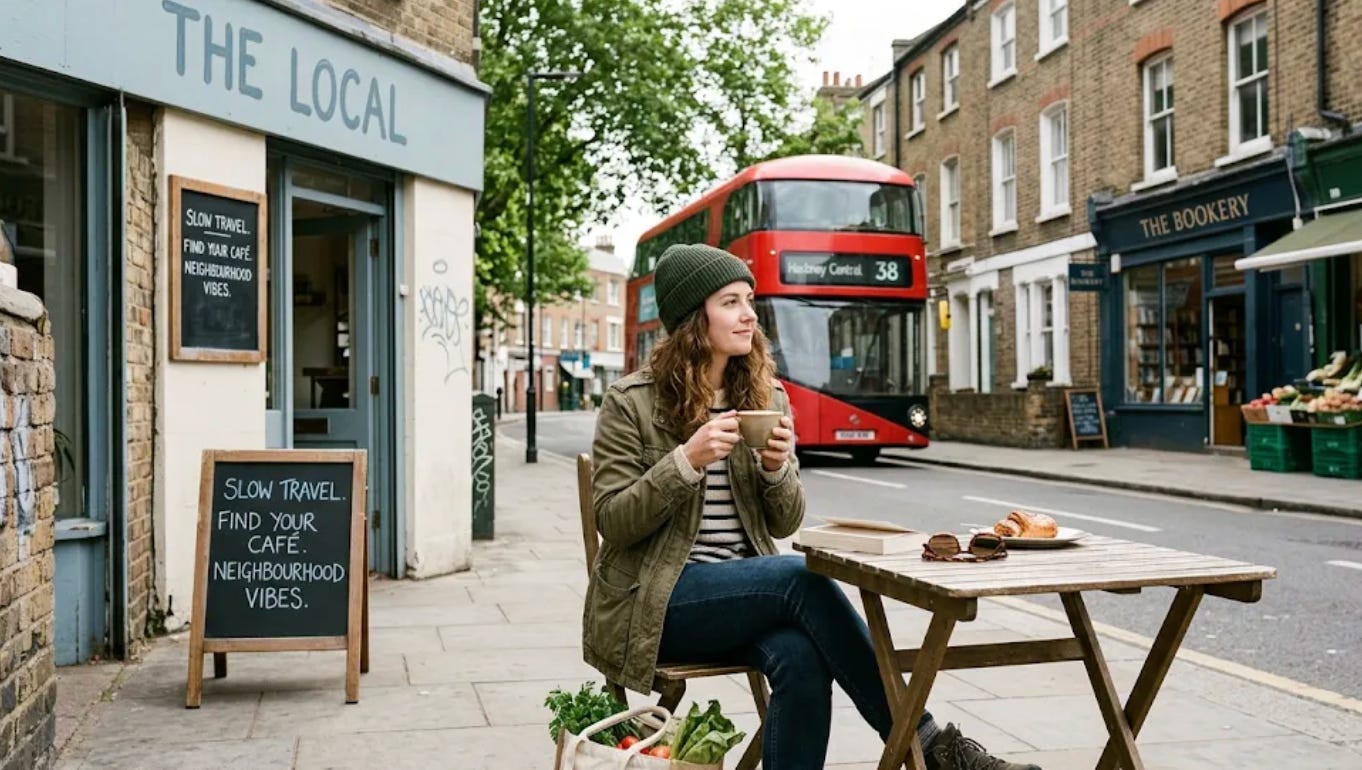
You don’t need to see everything. You don’t need a list. You don’t need to sprint around with a map and check boxes.
The best way to experience London in 2026 isn’t to be a tourist—it’s to stop being a tourist. Slow down. Pick a neighbourhood. Make a café yours. Take the bus. Explore a side street instead of a famous landmark. This is slow travel, and it’s how London actually becomes real.
Why Slow Travel in London, Why Now?
London is the number-one most-searched travel destination globally right now. Everyone wants to come. But what they don’t realise is that rushing makes London feel like every other city—a checklist, a photo opportunity, something to consume and move on from.
Slow travel is the antidote. It’s the thing that transforms a visit from “I saw London” into “I lived in London for a bit.” And honestly? It’s cheaper, less stressful, and way more fun.
Pick Your Neighbourhood Base
Forget staying in the West End or South Kensington. Those areas are fine, but they’re not London. They’re the backdrop to London.
Instead, pick a neighbourhood and stay there. Make it your home base. Shop at the local market. Find a café you visit three times. Notice things change day to day.
Where to stay:
Peckham — Vibrant, multicultural, younger, cheaper than central zones. Real London energy. Walk to Rye Lane. The food scene is extraordinary.
Dalston and Hackney — East London grit and creativity. Markets, vintage shops, independent restaurants. Properly bohemian without being pretentious.
Brixton — Historic, diverse, full of character. Electric Avenue is a proper market. Vinyl records everywhere. Community spirit.
Walthamstow — Working-class East London neighbourhood. Friendly, real, less visited. Great market (Saturday mornings).
Stoke Newington — Gentrified but still human. Independent bookshops, good restaurants, parks, a sense of neighbourhood-ness.
The Elizabeth line has made East and West London far more accessible than they used to be, so don’t feel trapped in central zones.
Get an Oyster Card and Actually Use the Bus
Everyone takes the Tube. The bus is where London actually happens.
Get an Oyster card (or use contactless) and take buses—not to get places faster, but to see the city. Buses move slowly enough that you see what’s happening on the street. You notice shop windows, street art, people, the actual grain of the neighbourhood.
The no. 15 bus travels past some of London’s best-loved spots. The no. 73 connects South London in a way no Tube line does. Pick a random bus and ride it to the end. You’ll discover something.
Find Your Weekly Rhythms
Slow travel means having rhythms. Things you do regularly. Markets you hit every Saturday. A café you visit Tuesdays. A pub quiz you join. A swimming pool you go to.
Borough Market — Saturday mornings, under the railway arches, proper food stalls, chaos in the best way. Go for breakfast—Scotch eggs, fresh juice, pastries.
Broadway Market (Hackney) — Saturday mornings, antique stalls, vintage clothes, food vendors. Genuinely cool without trying.
Columbia Road (Hackney) — Sunday mornings, flower market, independent shops, brunch spots. By afternoon it’s heaving; go early.
Portobello Road — Saturday mornings (yes, Saturday), vintage and antiques. Notting Hill, but real.
Southbank — Walk along the Thames any evening. Street performers, views, bookshops (Waterstones is massive), galleries, pubs.
Open-air swimming — Hampstead Heath Ponds (wild swimming, refreshing), London Fields Lido (summer Mondays–Sundays), Parliament Hill Fields. Wild and wonderful.
Regent’s Canal — Walk from King’s Cross to Little Venice. Narrow boats, cafés, towpaths, people fishing, genuinely peaceful.
Ditch the Tick-List
You probably know the famous things. Tower, Parliament, Buckingham Palace. If you’ve got time and interest, visit them. But don’t feel obligated.
Instead, do this: Pick three neighbourhoods. Walk every street. Notice details. Find the shop you want to return to. Find the pub that feels right. Have meals in local restaurants instead of chains.
Spend a whole afternoon in a single park. Actually read the plaques on buildings. Look up—London’s architectural details are above eye level.
Browse a charity shop for an hour. It’s not a race.
Budget for Slow Travel
The Elizabeth line and Oyster card are your secret weapons.
Monthly Travelcard (Zones 1–2): £171.70. Use this if you’re staying 2+ weeks. It caps your daily transport cost and makes you feel like a real resident.
One-bedroom flat (Zones 2–3): Roughly £1,900–£2,100 per month. Split with roommates and you’re looking at £700–£1,100 each. That’s genuine long-term London living.
Food: Cook sometimes. Use the markets. Get meal deals at supermarkets. Eat local curry or kebab instead of touristy chains. Budget £25–£40 per day if you’re mindful.
Attractions: Many are free (museums, parks, historic sites). Pay for one special experience (V&A East, a nice restaurant, a show) rather than many mediocre ones.
Total budget: £2,500–£3,500 per person per month for low-to-medium comfort in outer zones. Much less if you’re sharing accommodation.
Accommodation Options for Long Stays
House-sitting — Websites like Trustedhouses and Airbnb have good options. You get a whole flat, sometimes with garden space, for free or cheap.
Long-stay serviced flats — Companies like Citydestinations or Spotahome offer furnished flats on 1–3-month terms. Usually £1,500–£2,000 per month.
House shares — SpareRoom.com or OpenRent. You share a London flat with locals. Cheaper, social, genuinely local.
Airbnb monthly rates — If you book a place monthly, Airbnb gives a discount (often 30–50% off nightly rates).
Things Slow Travellers Actually Do
Charity shops — Oxfam, British Heart Foundation, charity chain stores. Browse vinyl, clothes, books. It’s free entertainment and sometimes you find treasure.
Library — Your local library is free to use if you register. Free WiFi, books, sometimes events. Legitimately useful and peaceful.
Galleries and museums — So many are free. Rotate through them. Spend time.
Cinema — Catch a film at a local cinema (not Leicester Square tourist traps). Lower prices, normal crowds.
Pub culture — Find a pub you like. Sit with a pint or coffee. Talk to people. This is genuinely how London works.
Picnics — Parks and green space are free. Buy cheese, bread, wine from a supermarket. Sit in a park. Watch life.
Slow Travel Is Better Travel
The whole point of slow travel is that it transforms how you experience a place. Instead of London being something you visit, it becomes something you inhabit—even if just for a few weeks.
You’ll find your café. You’ll have a regular route. You’ll notice seasons change. You’ll talk to locals in the pub. You’ll discover a street you love. And when you leave, you’ll realise you don’t just know London—you’ve lived a bit of London.
That’s worth far more than a tick-list and tired feet.
FAQs
How long should I stay to do “slow travel” properly?
Minimum 2 weeks, ideally 3–4. You need time to actually settle in.
Which neighbourhoods have the fewest tourists?
Walthamstow, Dalston, parts of Peckham, Stoke Newington, Stratford (beyond the Olympic Park), and Whitechapel. Go East.
Is London really affordable for long stays?
Yes, if you skip tourist traps and shop locally. £2,500–£3,000 per month is reasonable for one person.
Can I work remotely from London?
Absolutely. Plenty of cafés have good WiFi. Libraries are free. Co-working spaces exist but aren’t necessary.
Which month is best for slow travel?
May–June or September–October. Summer is crowded and hot. Winter is grey but quieter. Spring is genuinely lovely.
Should I join a gym or swimming club?
If you’re staying 4+ weeks, yes. It gives you a routine and community. Open-air swimming is cheaper and more fun.
What should I do if I get lonely?
Join a class (yoga, language, art). Volunteer. Go to a pub quiz. Use apps like Meetup. Humans are social; London is full of them.
Is the Elizabeth line really that good?
Yes. It’s genuinely changed how accessible East London is. Use it.
What if I run out of things to do?
You won’t. London has something new in every direction. But if you do, take a day trip—Brighton, Oxford, Windsor are all 1–1.5 hours away.
Can I do slow travel if I have limited time?
Sort of. Even a week of slow-travel mindset (fewer attractions, more neighbourhood time) is better than a rushed itinerary.
What’s the best “slow travel base” for first-timers?
Stoke Newington or Peckham. Good transport links to central London if you want them, but enough character to make you feel like you live there.