
The Ultimate First-Timer's Guide to London: Everything You Need to Know Before You Go
📍 This article reflects my personal experience and independent research. Always verify current transport fares, opening hours, and entry requirements before your visit.
There is a specific kind of overwhelm that hits when you open a browser tab to start planning a trip to London. Within minutes you have forty-seven tabs open, three Tube maps, a spreadsheet of “must-do” attractions that would take three weeks to complete, and a vague sense that you’re already doing it wrong.
You’re not doing it wrong. London is enormous, layered, and genuinely unlike anywhere else — and the only way to do it justice is to stop trying to see all of it.
This is the guide I’d give to a friend flying in for the first time.
How Long Do You Actually Need?
The honest answer: longer than you think, but you can still have a brilliant trip in three or four days.
London doesn’t compact well. The city spans 32 boroughs and hundreds of distinct neighbourhoods, and getting between them takes longer than maps suggest. A realistic three-day itinerary lets you explore two or three areas properly and hit the highlights you care most about.
If you have a week, you’ll feel like you’re scratching the surface. If you have two weeks, you’ll start to feel like a temporary Londoner. My advice: pick three or four things you absolutely must do, and let the rest of the city reveal itself through wandering.
Getting Around Without Losing Your Mind
The Tube is your friend — once you understand it. London’s Underground has 11 lines and covers most of Zone 1 and 2, where most visitors spend their time.
You don’t need an Oyster card. Contactless bank cards and Apple Pay work everywhere on the Tube, buses, and Overground. Just tap in and out at the yellow readers. Your card is automatically capped at the daily maximum fare.
Buses are cheap, scenic, and underrated. Sitting on the top deck through Westminster or along the South Bank is one of London’s best free experiences.
Walking is the city’s secret transport mode. Many Tube stations are just a 10–15 minute walk apart. From Westminster to Covent Garden, or along the South Bank, your feet will get you there faster and show you far more.
One genuine safety note: keep your phone in your pocket on busy streets. Phone snatching by moped is a real thing in tourist areas. Not a reason for anxiety — just a reason not to stand outside a Tube station scrolling with your phone out.
Where to Stay
For first-timers, I’d suggest staying in Zone 1 or Zone 2, prioritising proximity to a Tube station over proximity to specific attractions.
Covent Garden and Southwark are brilliant bases — central, walkable, good transport links. South Kensington is excellent with children (the museums are on the doorstep). Shoreditch suits travellers who want to escape the tourist centre and experience a more local London.
Avoid basing yourself purely on price without checking transport links. A very cheap hotel in Zone 4 will cost more in fares and exhaustion than a slightly pricier one in Zone 2.
The Honest Attractions Shortlist
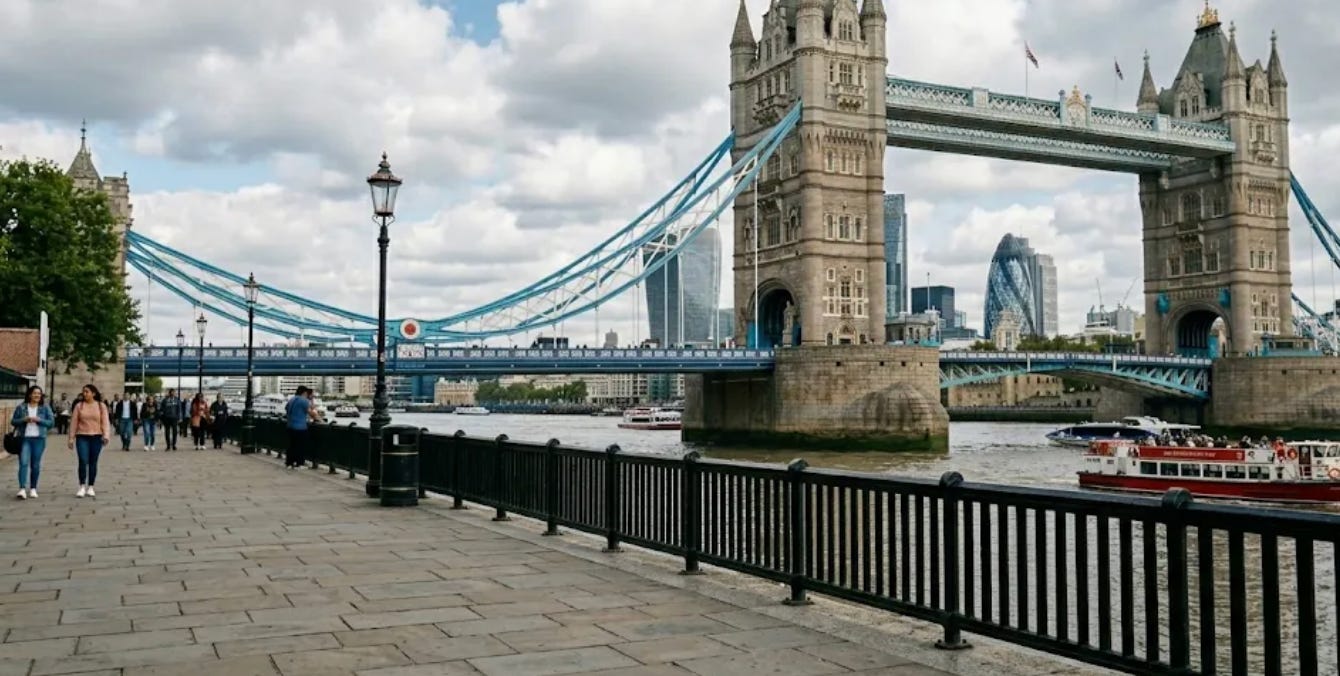
The Tower of London, the British Museum, the Tate Modern, and a walk along the South Bank from Westminster Bridge to Tower Bridge are as good as their reputations — do them without guilt.
The London Eye is expensive and the queues are long. The free Sky Garden at 20 Fenchurch Street offers arguably better views and costs nothing (book free tickets online in advance).
Borough Market for food is genuinely excellent on a weekday morning. Avoid weekend lunch if you’re claustrophobic.
Hyde Park, Regent’s Park, and St James’s Park are all free, beautiful, and more pleasant than any attraction with a queue.
London on a Budget
The British Museum, Natural History Museum, Victoria and Albert Museum, National Gallery, and Tate Modern are all free. On a rainy Tuesday you can fill your entire day without spending a penny on entry.
Eat lunch at a market — Borough, Seven Dials, or Maltby Street — rather than a restaurant. Street food at London’s markets is genuinely excellent and considerably cheaper.
An average sit-down lunch in Zone 1 runs £12–£18 per person. A coffee is typically £4–£5. Budget roughly £50–£80 a day for food and travel if you’re being careful.
Final Thought
London rewards the visitor who slows down. The city is too big, too layered, and too alive to be experienced as a checklist. Pick a neighbourhood, walk through it, eat something local, get pleasantly lost — and you’ll understand what makes London what it is.
Have questions about planning your trip? I’d love to hear from you — drop me a message.
FAQs
Q: Do I need cash in London?
A: Rarely. Contactless card and phone payments are accepted almost everywhere. Keep a small amount of cash (£20–£40) for very occasional use.
Q: Is London safe?
A: In my experience, yes — it’s a well-policed major city. Keep your phone in your pocket, be aware of your surroundings, and use the same common sense you’d apply in any large city.
Q: Do I need to tip in restaurants?
A: It’s customary to leave 10–12.5% if you’re happy with service, but it’s not obligatory. Many restaurants add a discretionary service charge — you’re entitled to ask for it to be removed.
Q: What’s the best way to get from Heathrow to central London?
A: The Elizabeth line takes around 30–45 minutes to central London and is fast and comfortable. The Heathrow Express is faster but more expensive. Avoid taxis unless sharing costs.
Q: When is the best time to visit London?
A: May to September for weather and long days. December for Christmas lights. March to April for quieter streets and spring blooms. There is no truly bad time — London is a year-round city.
Q: How far in advance should I book?
A: Book accommodation early — London hotels fill quickly. For popular attractions like the Tower of London, book online in advance to skip queues.
Q: Do I need a visa?
A: This depends on your nationality. Always check current requirements at gov.uk before travelling.
Q: How do I use the Tube?
A: Download the TfL Go app. Tap your contactless card on the yellow reader when you enter and exit each station. Always tap out — you’ll be charged the maximum fare if you don’t.
Q: What should I pack?
A: Comfortable walking shoes (you’ll do 10+ miles a day), a lightweight rain jacket, a portable phone charger, and a Type G adaptor if travelling from outside the UK.
Q: Is the London Pass worth it?
A: If you’re visiting mostly free museums, no. If you’re planning multiple paid attractions — Tower of London, London Eye, Kensington Palace — calculate your specific plans before buying.
— A note from the editor
Destined for London shares my personal experiences, opinions, and independent research. Everything I write reflects what I’ve found to be true at the time of publishing — but London changes constantly, and what works for me may not work for you. Always do your own research and seek qualified professional advice before making decisions about property, finance, schools, healthcare, or anything else that matters. Some links in my posts are affiliate links, meaning I may earn a small commission at no extra cost to you. Sponsored content is always clearly labelled. Read the full Terms and Privacy Policy.