
The Up-and-Coming London Areas That Travel Guides Aren't Writing About Yet
Travel guides have a lag problem. By the time a neighbourhood makes it into a major guidebook, it’s usually been ‘up and coming’ for long enough that it’s now just come — and the prices, the crowds, and the character have all shifted accordingly. Shoreditch was ‘up and coming’ in 2008. Peckham was new and exciting in 2015. Both are excellent; neither is a secret.
Here are the areas that I think are at an earlier, more interesting stage — where you get the genuine character without the tourist overlay.
Woolwich, South-East London
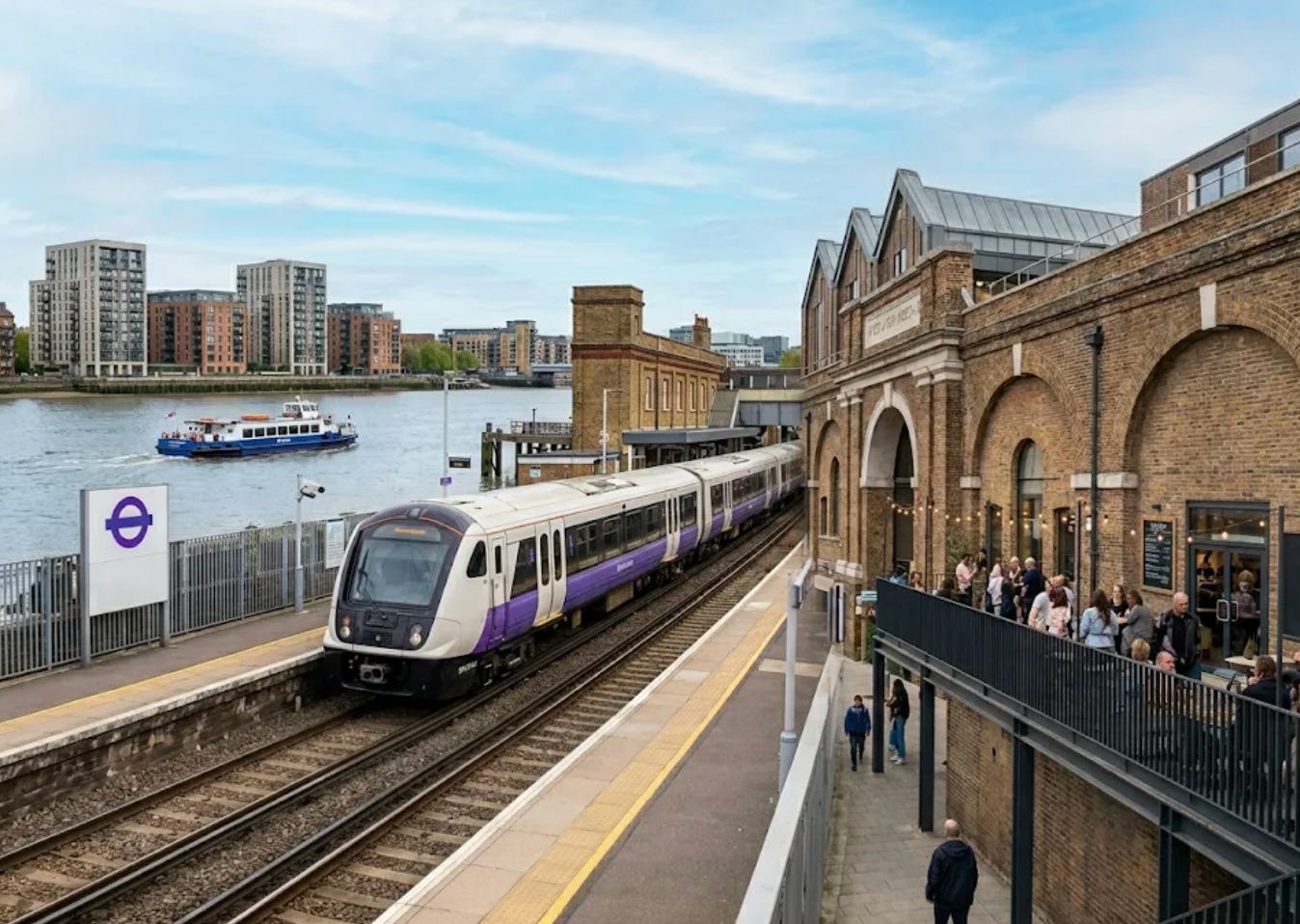
Woolwich has the bones of an extraordinary place: the Royal Arsenal (a vast, beautifully preserved Victorian industrial complex now converted to housing and public space), the Woolwich Ferry (free), excellent transport connections since the Elizabeth line arrived, and a genuinely diverse, lively high street.
The Woolwich Works arts venue opened in 2021 in the former Victorian artillery store and is already one of the most interesting performance spaces in London. The Crossrail connection means central London is now about 12 minutes away by train.
In my experience, Woolwich is at the stage where the infrastructure and the arts scene are already excellent, but the gentrification wave that tends to accompany them hasn’t fully arrived. Go now.
Getting there: Elizabeth line to Woolwich. Also accessible by DLR.
Leyton, East London
Leyton is directly adjacent to Stratford (which has been transformed by the 2012 Olympics legacy) but has retained a more genuinely residential character. The high street is working-class and diverse; the back streets have Victorian terracing at prices well below neighbouring Walthamstow.
The food scene is developing quickly, driven by the local Somali, South Asian, and Caribbean communities. A clutch of excellent independent coffee shops and small restaurants has opened in the past two to three years. Leyton Orient’s stadium is here — a community football club that has genuinely loyal local support.
Getting there: Leyton tube (Central line).
Deptford, South-East London
Deptford has been at the edge of development for years and is finally arriving as a destination. Deptford Market Yard has developed into one of the better street food and independent shopping destinations in south London. The arts scene — partly driven by Goldsmiths University nearby — is strong.
The historic dockyard area has extraordinary infrastructure: the Master Shipwright’s House and the adjacent buildings are underutilised heritage assets that are slowly finding new life. The area around Deptford Church Street retains a working-class market character that’s increasingly rare in inner London.
Getting there: Deptford station (trains from London Bridge) or New Cross Gate.
Tottenham, North London
Tottenham’s transformation has accelerated significantly since the new Tottenham Hotspur stadium opened in 2019. The High Road area around the stadium has seen significant investment. Tottenham Hale — the transport hub at the other end — is undergoing major regeneration.
Beyond the stadium, Tottenham has an extraordinary Caribbean heritage (the long-established Afro-Caribbean community), strong Colombian and Turkish communities, and a food scene that reflects this diversity. Bruce Castle — a Tudor manor house in a public park, free — is one of London’s more remarkable hidden attractions.
Getting there: Seven Sisters or Tottenham Hale tube (Victoria line).
Hackney Wick and Fish Island, East London
Hackney Wick has been developing for a decade as an arts and creative district adjacent to the Olympic Park. What makes it interesting now is that it has matured: the warehouse studios are establishing themselves, the canal-side bar and restaurant scene is excellent, and the area has an energy that’s genuinely distinctive.
The Olympic Park itself — free to access, with the ArcelorMittal Orbit observation tower as its centrepiece — is immediately adjacent and continues to attract events and visitors.
Getting there: Hackney Wick Overground.
What These Areas Have in Common
All are well-connected by public transport (critical for London neighbourhood development), all have genuine communities whose character pre-dates and persists alongside the development, and all are at the stage where the interesting things are happening but the ‘it’s been discovered’ premium hasn’t yet reached hotels and restaurants.
Know a London area on the rise I haven't covered? Drop me a message — I update this guide regularly.
FAQs
1. Are these areas safe for visitors?
In my experience, yes, all are ordinary London residential areas. Normal urban awareness applies.
2. Is Woolwich worth a specific trip?
In my opinion, yes — the Royal Arsenal alone justifies the journey, and the Elizabeth line makes it fast from central London.
3. What’s the difference between Leyton and Walthamstow?
Walthamstow has further along the development curve and has more established independent restaurants and arts infrastructure. Leyton feels rawer and more genuinely local, which is its appeal at this stage.
4. Is Deptford actually good for eating?
In my experience, increasingly yes — Deptford Market Yard in particular has developed a good food offer. The surrounding area still has the excellent, affordable local restaurants that the more developed areas have lost.
5. How long before these areas become ‘mainstream’?
Impossible to predict, but in my experience, areas with good transport links tend to develop faster. Woolwich (Elizabeth line) and Tottenham (Victoria line) are likely to change more quickly than Deptford.
6. Are there hotels in these areas?
Limited, but growing. All are easily accessed from central London on excellent transport links, so staying elsewhere and visiting for the day is the practical approach for most visitors.
7. What is the Woolwich Works?
A large arts venue opened in 2021 in a converted Victorian artillery store at the Royal Arsenal. Theatre, music, dance, and community events. Excellent programming and extraordinary building.
8. Is Hackney Wick really still up and coming?
It’s been ‘up and coming’ for a decade, which is fair criticism. But the area is still genuinely interesting and less tourist-facing than Shoreditch. I include it because the canal-side and warehouse character remains compelling.
9. What is Bruce Castle in Tottenham?
A 16th-century manor house set in a public park in Tottenham, now housing a local history museum. Free to visit. One of the more unexpected heritage sites in north London.
10. Where should I go if I want something that feels genuinely undiscovered?
In my honest opinion, Leyton right now is the combination of good food from the local communities, a developing café scene, and genuinely residential streets that visitors seldom see. It won’t stay undiscovered for long.
— A note from the editor
Destined for London shares my personal experiences, opinions, and independent research. Everything I write reflects what I’ve found to be true at the time of publishing — but London changes constantly, and what works for me may not work for you. Always do your own research and seek qualified professional advice before making decisions about property, finance, schools, healthcare, or anything else that matters. Some links in my posts are affiliate links, meaning I may earn a small commission at no extra cost to you. Sponsored content is always clearly labelled. Read the full Terms and Privacy Policy.